
Browse a Hayward Street Directory Trail
A street-by-street search begins with a precise address and a jurisdiction check. Hayward WebMap can confirm whether a postal Hayward address sits inside incorporated Hayward or in nearby unincorporated Alameda County. The parcel view then supplies a bridge to APN, situs, mailing, tax, permit, and deed sources. That bridge matters because an owner lead is not a household roll, and a tax mailing address is not the same as the land address. A sound Hayward street directory trail records each source and the question it can answer.
- Run the Hayward site address through the Alameda Assessor property portal by APN, type-ahead address, or property address. Save the APN and note whether the situs and tax-mailing lines differ.
- Open the Hayward WebMap, turn on parcels and APN labels, and click the target parcel. Record the public or censored owner field, complete situs parts, area, and nearby parcel links.
- Use the California voter-status route only for an authenticated Hayward self-check. A permitted Alameda voter-file request can be sorted by street, but ordinary users cannot browse a public block roll.
- Search the Alameda Clerk-Recorder name index for the Hayward owner as grantee, match the instrument by APN, legal description, and date, then follow the seller as an earlier grantee.
- Check Polk or reverse directories for historical Hayward occupants and address changes. A missing entry is a clue to test with census, newspapers, probate, or an obituary, not proof of departure or death.
Read a Hayward Street GIS Parcel Panel
The County Parcel Viewer and Hayward WebMap serve different parts of the same address task. Hayward’s parcel layer is query-capable and can expose a censored Parcel Owner field, APN variants, full situs parts, parcel area, tax-rate area, and a separate tax mailing address. It also links APN views toward County assessment and tax systems. Those fields support a careful street scan, but map information is not a legal survey and the owner lead is not proof of who occupies the property.
The viewer also offers a broader set of layers than a simple Hayward street map. Parcels, addresses, jurisdictions, APN labels, zoning, hazards, schools, historic resources, planning districts, police beats, fire districts, Census 2020 tracts, and Council Adopted Neighborhoods can add context to a Hayward parcel. Basemap choices include 1954, 2014, 2017, 2020, and 2023 aerials, along with parcel, topographic, and elevation views.
The Alameda County Parcel Viewer launch page is the source for the Hayward county map entry point shown here.
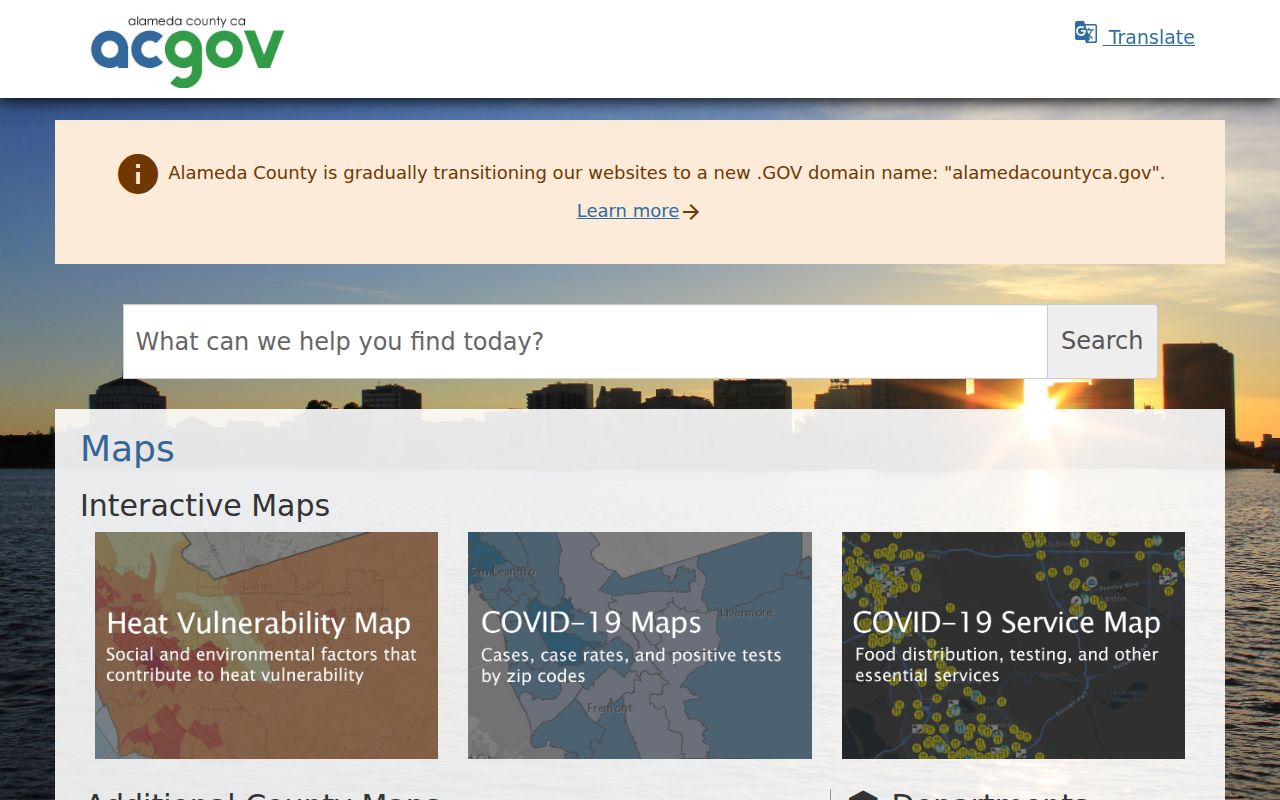
The county map is useful for locating the parcel layer before the more detailed Hayward address work begins on a Hayward street.
| Hayward address and streets | Geocoder or autocomplete for the Hayward city locator service; not required. |
|---|---|
| Hayward site or business search | Text or geocoder mode for an additional Hayward locator. |
| Hayward layer list | Checkboxes for Hayward parcels, zoning, hazards, districts, neighborhoods, schools, and other layers. |
| Hayward basemap | Parcel, Hayward aerials from 1954, 2014, 2017, 2020, and 2023, plus topo or elevation. |
| Hayward parcel identify | Map click that can show a Hayward owner lead, APN, situs, and mailing fields. |
| Hayward print or export | Print, PDF, Word, Excel, and KML-type configuration controls for Hayward research. |
Hayward Assessor Records by Address
Alameda’s public property portal for Hayward addresses is an APN search, not a web owner-name directory. The Assessor explains that owner names are omitted from the web property search, while Hayward ownership can be checked through controlled channels. The free lobby kiosk at 1221 Oak Street, Room 145, is available Monday through Friday from 9:00 a.m. to 4:30 p.m. Limited Hayward address or APN help is also available by phone at (510) 272-3787, by email at AssessorWebResponse@acgov.org, or through a paid written response.
The Alameda property information portal is the source for the Hayward search screen represented by the image below. Search by one mode at a time, preserve the APN exactly as returned, and treat the mailing address as a tax correspondence destination rather than a statement about Hayward residence.
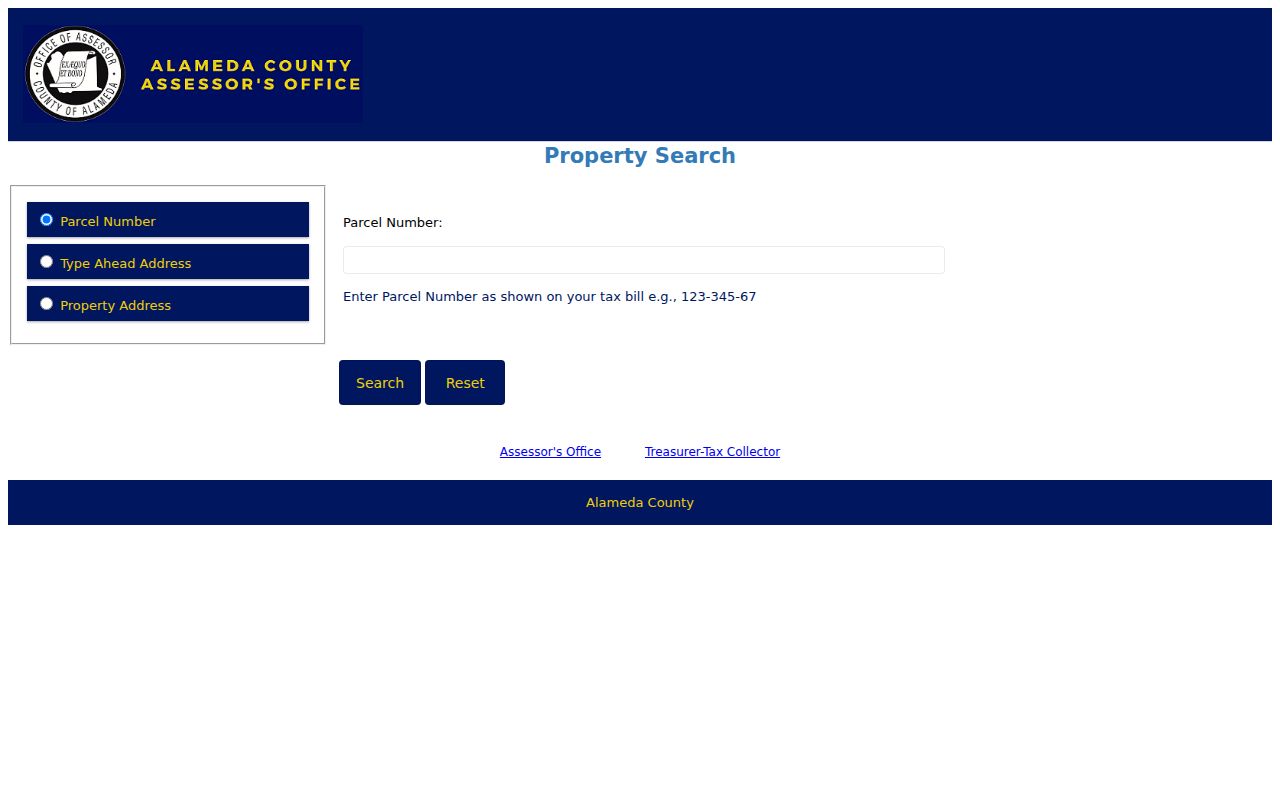
The Hayward property portal narrows the parcel; the controlled owner channels supply the additional confirmation that the web screen withholds.
| Hayward parcel number | Text or parcel-number mode, such as the segmented value printed on a tax bill; use one search mode. |
|---|---|
| Hayward type-ahead address | Autocomplete for a suggested situs address; use one search mode. |
| Hayward property address | Text address search without an owner-name input. |
| Hayward search or reset | Run the selected query or clear the form. |
Assessor myth: public Hayward ownership does not mean Alameda publishes a searchable owner-name web roll. A kiosk, phone, email, or written channel can be necessary, and protected official home addresses are a reason the public web view suppresses names.
Hayward Records Searchable by Street
Hayward address-keyed records do not all describe the same person. Parcel GIS supplies a current spatial lead. Assessment describes value and characteristics, with owner confirmation controlled outside the public web search. Deeds establish recorded parties and a title chain. Permits show who submitted work or appeared in a property file. Voter data is purpose-limited. Polk and reverse directories can add historical Hayward address occupants. Taken together, the sets create a street record without pretending that any one set is a complete resident list.
| Record Set | Keeper | What It Shows | Access |
|---|---|---|---|
| Hayward city parcel GIS | Hayward GIS | Censored owner lead, situs, tax mailing, APN, area, and adjacent parcels | Free Hayward online map or service |
| Hayward assessment | Alameda Assessor | Values and characteristics; owner through controlled channels | APN or address web search; kiosk, phone, or email for owner access |
| Hayward deeds and title records | Alameda Clerk-Recorder | Parties, instrument date and type, legal description, and title chain | Electronic index from 1969; microfilm for 1853-1968; copies paid |
| Hayward permits and property files | Hayward Development Services | Applicants, contractors or owners when recorded, scope, status, and inspections | Hayward portal from 2014; earlier files by CPRA request |
| Hayward tax account | Alameda Treasurer-Tax Collector | Current or prior tax bill and delinquency information | APN or Hayward address-oriented online entry |
| Hayward voter file | Alameda Registrar | Registration administration when a lawful purpose permits access | Authenticated self-check or purpose-restricted application |
| Hayward Polk or reverse directory | HAHS, Oakland Public Library, and area libraries | Historical Hayward residents, addresses, and occupations where indexed | Physical or research access; cited 1925-1976 range |
The APN is the main bridge between modern Hayward sources. Match the parcel’s legal description and date to a recorder index hit, then compare the permit project site and the directory’s street line. The same Hayward address may have a different mailing city, ZIP, or historic community name, so preserve each field rather than flattening it into one label.
Turn a Hayward Address Owner Into a Deed Chain
Alameda County’s Hayward recorded-document series begins in 1853, but the search method changes at 1969. The electronic name index covers 1969 to the present. The 1853-1968 grantor and grantee indexes are on microfilm and require in-person work at the Clerk-Recorder, 1106 Madison Street in Oakland. A current Hayward deed may not be orderable for about two weeks after recording, and a recent filing from the last three months may require Customer Service help when the party names and document type are known.
Search the current Hayward owner as grantee, match the candidate acquisition by APN, legal description, and date, then take the seller or grantor backward as the next grantee search. Address is not the recorder’s primary key. An instrument number identifies an online copy order, while book/page or reel/image references can bridge older material. Plain recorded copies are $3.50 per page; certified copies cost $4.50 for the first page and $3.50 for later pages. Mail, counter, and online order channels each have different retrieval limits, so an index hit should be treated as a lead until the record is read.
The Alameda official public-records page explains the electronic cutoff and the county’s retrieval process. It is also where Hayward recorder records should be verified before a street conclusion is written.
- Parcel
- A mapped Hayward tax unit identified by an APN. It links an address to assessment, tax, GIS, and often deed research.
- Situs address
- The physical Hayward location of the land. It can differ from the separate address used for tax mail.
- Plat
- A recorded map or subdivision description that helps connect a Hayward parcel to its legal layout.
- Criss-cross directory
- A Hayward street-order directory section that lets a researcher move from an address to a historical name, where the volume includes one.
Hayward Permits by Address
Hayward e-Permits adds a work history to the Hayward street directory trail. Public search can connect an address with a permit or plan record. For registered users, the system supports applications, contractor association, invoice payment, permit downloads, inspections, and inspection results. The online property record is mainly current from 2014 forward. Earlier files require a focused City Public Records Act request, because the older paper or archived record is not part of the online cutoff.
Hayward permit evidence has a narrow meaning. A record can show an applicant, contractor, owner when recorded, project site, work scope, issue date, status, and inspections. That establishes who dealt with the city and what work was recorded. It does not establish every person at the address. Code or service requests may reveal less because complainant identities, investigative details, and personal contact information can be exempt.
The Hayward Building Division is the source for the permit and building-record context represented in the image below.
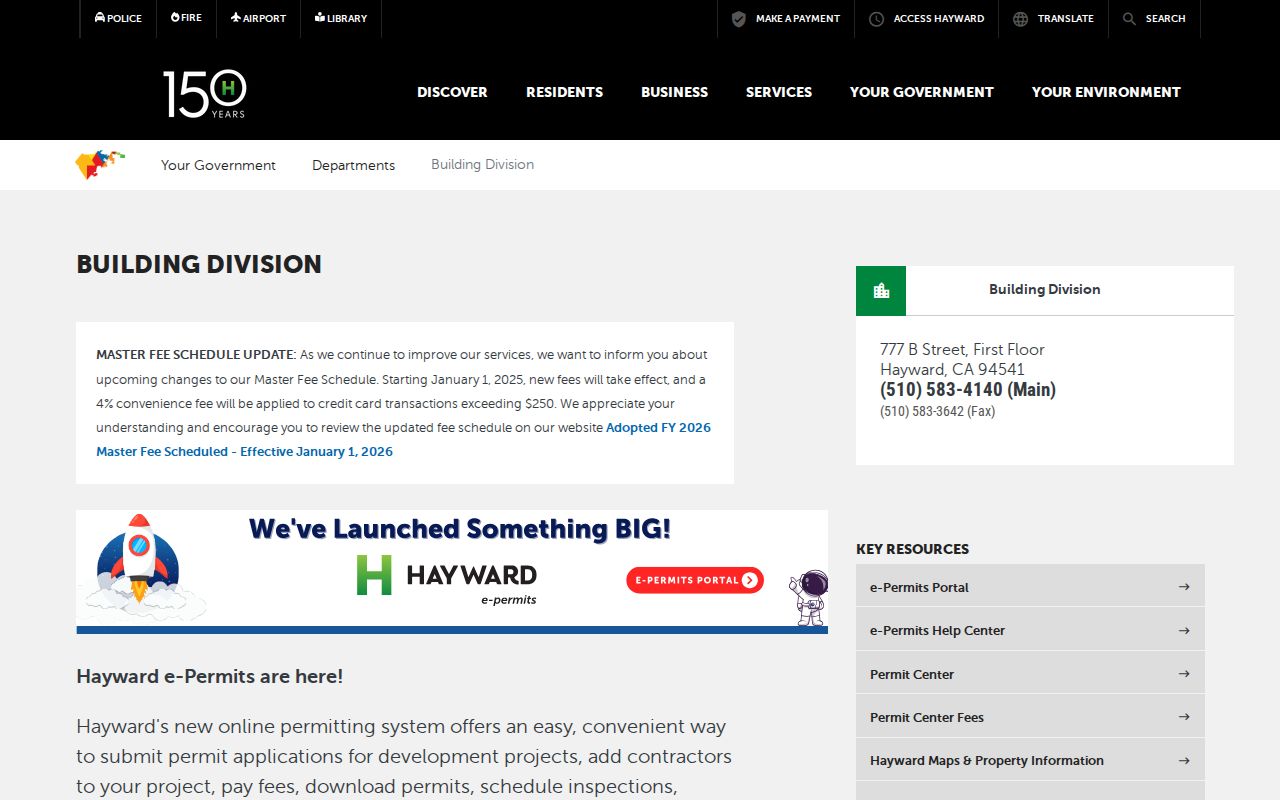
The Hayward building record adds a dated activity trail, while the parcel and deed sources remain the stronger bridge for ownership history.
Hayward Voter Data Is Not a Street Roll
California’s Hayward voter-status route sends an Alameda voter to My Voter Profile for an authenticated self-check. The workflow uses a California driver license or ID, the last four digits of a Social Security number, and date of birth as confidential authentication values. A profile may show status, address, party, precinct or district, polling place, sample ballot, and vote-by-mail history to the authenticated voter. It is not a public person search.
Elections Code section 2194 limits Hayward voter-registration information to election, scholarly, journalistic, political, or governmental purposes. Commercial use is prohibited. A permitted voter-file request can ask for geography and street sorting, but the application requires applicant and organization details, requested data, an allowed-purpose statement, project description, recipients and security, an acknowledgment, and a perjury signature. Driver-license numbers, Social Security numbers, signatures, Safe at Home records, and protected addresses remain confidential. Participation history shows that an election was participated in, not how a person voted.
For a personal Hayward status check, use the California voter-registration gateway and the Alameda Registrar’s official election office. A street directory should never present voter data as an open Hayward block list.
Hayward Street Lines in Polk Volumes
Historical Hayward street work fills a gap that parcel records cannot. Hayward city-directory citations run from 1925 through 1976, with the caution that the span is a research bibliography and does not prove that every annual volume survives. Oakland Public Library lists combined Polk’s Hayward and San Leandro volumes for 1948 and 1951, plus Hayward volumes for 1956/57, 1959, 1962, 1965, 1967, 1969, 1971, and 1976. The Alameda County Library catalog lists a Polk’s Hayward and San Leandro call number, 917.9465 POLK’S.
Consult the Hayward abbreviation key before transcribing a street entry. The research method records surname and given name, a spouse in parentheses when shown, address, and marks such as h for home, r for resides or rooms, and wid for widow. Repeat the same Hayward address across adjacent editions. A disappearance can mean a move, death, marriage or name change, or a missed enumeration. It is not a finding by itself.
When the goal shifts from today’s parcel to a household across time, the Hayward city directory collections page keeps the shelf locations and reading method together. The street directory should use that historical evidence as a cross-check, not as a substitute for a current custodian record.
Hayward Address Fields and ZIP Spillovers
Hayward’s address layer keeps house number, directional and street type parts, street name, suffix, unit, city, ZIP, zone, full address, APN, coordinates, and current, pending, or retired status as separate fields. It supports SQL filters, distinct and statistical results, sorting, pagination, distance, and extent queries. A Hayward street scan should preserve the returned city and ZIP rather than assume that the postal label proves incorporation.
The four core Hayward residential ZIP codes are 94541, 94542, 94544, and 94545. Postal 94541 reaches parts of Cherryland and Ashland, while GIS edge points also appear in 94546, 94552, 94587, and 94588. Those small edge counts are boundary or administrative spillovers, not additional core Hayward residential ZIPs. USPS validates delivery, while WebMap verifies jurisdiction. Hayward city staff direct researchers to check the map before requesting city permit files.
The Hayward WebMap is the source for the address and parcel view represented below.
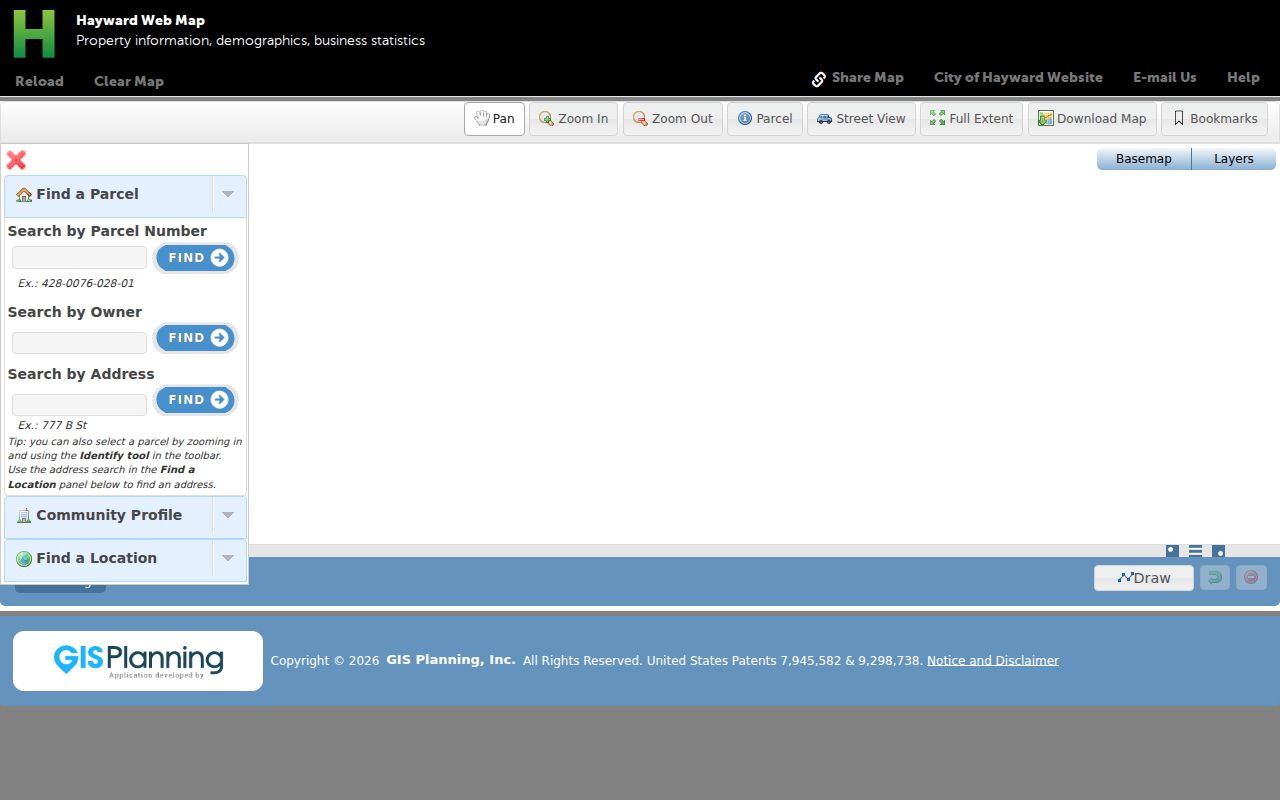
The Hayward map’s current and retired status fields help bridge an address change, but no verified citywide renumbering year was located.
What Hayward Street Records Omit
A Hayward street directory can identify a parcel, an owner lead, a recorded transfer, a permit participant, or a historical address entry. It cannot supply a complete list of occupants, children, cohabitants, or every unit’s household. Matching situs and mailing addresses support an owner-occupancy hypothesis, but do not prove it. A remote mailing line may point to an absentee owner, trust, or billing destination, and a permit applicant may be a contractor rather than a resident.
Department of Motor Vehicles personal data is restricted by the federal Driver’s Privacy Protection Act and California law. No public Hayward utility household roster was verified. Protected voters can be withheld, and Safe at Home can place a substitute address in government systems. A Hayward street-level result therefore needs a source label, date, and clear statement of what remains unknown.
Lawful use. Hayward address records are for personal, lawful research and civic or family-history work. Never use a street result to stalk, harass, intimidate, or harm anyone.
For a single-name Hayward question, shift from the street chain to the distinct Hayward resident lookup workflow, where stable numbers and independent records are weighed together.