
Hayward City Directory Collections by Year
The strongest Hayward city directory evidence comes from named Hayward holdings rather than a claim that one complete run exists. A local history report cites R.L. Polk directories from 1925 through 1976, but that span is not proof that every year survives. Oakland Public Library provides the most useful exact-edition fallback for several Polk volumes. San Leandro’s History Room adds a broader nearby run, and the Library of Congress supplies a digitized Hayward telephone volume that can be inspected page by page.
| Collection | Years | Where Held | Access |
|---|---|---|---|
| Hayward R.L. Polk directories | 1925-1976 cited span | Hayward Area Historical Society and local-history references | Confirm exact surviving years before relying on a gap |
| Polk’s Hayward and San Leandro | 1948, 1951 | Oakland Public Library for Hayward research | Hayward library holdings and reference assistance |
| Polk’s Hayward Directory | 1956/57, 1959, 1962, 1965, 1967, 1969, 1971, 1976 | Oakland Public Library for Hayward | Exact-edition Hayward shelf fallback |
| Hayward and San Leandro directories | 1925-1965 | San Leandro Library History Room | In-person Hayward local-history research |
| Hayward telephone directory | September 1952-September 1953 | Library of Congress | Digitized Hayward volume with 467 images |
| Hayward directories and telephone books | Partly unitemized | Hayward Area Historical Society archive | Appointment, Hayward on-site work, or remote request |
The Hayward collections overlap without becoming interchangeable. A telephone book offers subscriber name, street address, exchange, and number. A Polk volume may carry an address section and abbreviation key. San Leandro’s holdings add yearbooks, census data, maps, clippings, and obituary research. Treat the table as a Hayward research map: verify the exact item, edition, and access rule with the holding institution.
Where Hayward Polk City Directories Sit
Oakland Public Library’s directory holdings are unusually useful for Hayward because the exact years are named. Its combined Hayward and San Leandro volumes include 1948 and 1951. The Hayward list then identifies 1956/57, 1959, 1962, 1965, 1967, 1969, 1971, and 1976. That list gives a Hayward researcher a defensible starting point when the broad 1925-1976 citation leaves a question about a particular year.
The Oakland Public Library directory and phone-book list is the source for the exact shelf inventory shown here.
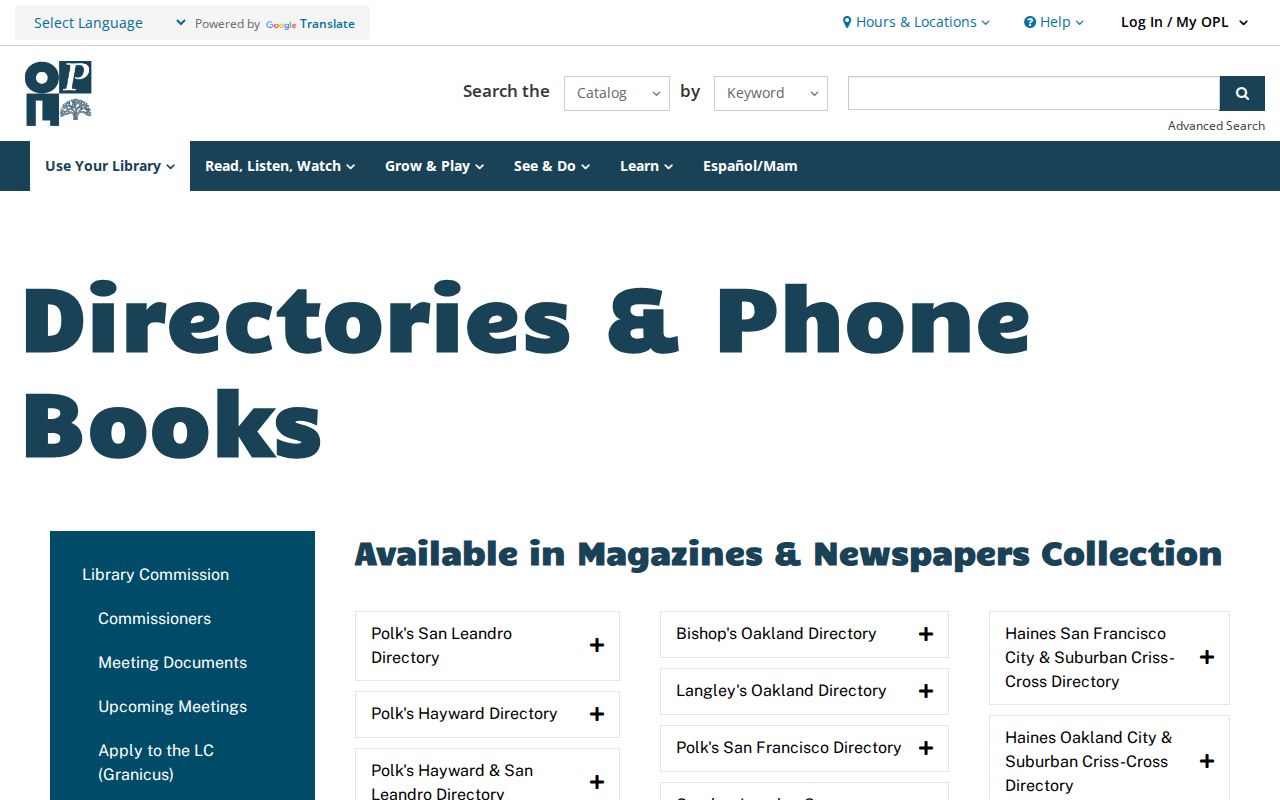
The Oakland holdings can anchor a Hayward name or address before a search moves to another library, a newspaper, or a county record.
Alameda County Library also catalogs Polk’s Hayward and San Leandro at call number 917.9465 POLK’S. Hayward Area Historical Society, at 22380 Foothill Boulevard on the second floor, keeps Hayward city directories and telephone books in a partly unitemized archive. HAHS lists (510) 581-0223 and archives@haywardareahistory.org. Appointments are strongly advised; Hayward on-site research and quick archivist responses are free, while remote written requests normally take two to three weeks and image reproduction or publication carries a charge.
Digitized Hayward Directory Trails
The digitized Hayward directory search at Internet Archive is a discovery route, not automatic proof that every result is an authoritative library scan. Check the item record, edition, and scan provenance before treating a page as evidence. The Library of Congress has a more specific September 1952 to September 1953 Hayward telephone volume with 467 digitized images. Its alphabetical section shows subscriber or business name, street address, and telephone exchange or number, while classified pages add headings and advertisements.
Digital access helps with Hayward page inspection, but it does not solve the core interpretation problems. A typed name can be a business, a subscriber, or a household reference. A street line can use an older address form. A missing scan can be a collection gap rather than a missing Hayward resident. Preserve the item title and page image reference when copying a result, then compare it with a second edition or a local finding aid.
The digitized Hayward directory search provides the source view shown below; the Hayward Area Historical Society research gateway adds a local Hayward route when a result stops short of the original volume.
A digitized Hayward search is most useful when it points back to a named volume, date, and holding institution.
Reading Entries in a Hayward City Directory
The inspected local sample is the Library of Congress telephone volume, not a digitized Hayward Polk page. Its alphabetical entry can show the subscriber or business name, street address, telephone exchange, and number. Classified pages add a heading and advertisement. Polk research requires a different caution: consult the Hayward volume’s abbreviation key first, then transcribe the surname and given name, a spouse in parentheses when shown, the address, and marks such as h, r, or wid exactly as printed.
A Hayward directory entry is a dated clue. It may describe a subscriber, a household reference, or a business line. It does not by itself prove present residence, title, family relationship, or the reason a name disappears. Read the page in its own edition, capture the street line, and compare the same Hayward address across nearby years.
The Hayward Area Historical Society catalog can help identify local material before an appointment.
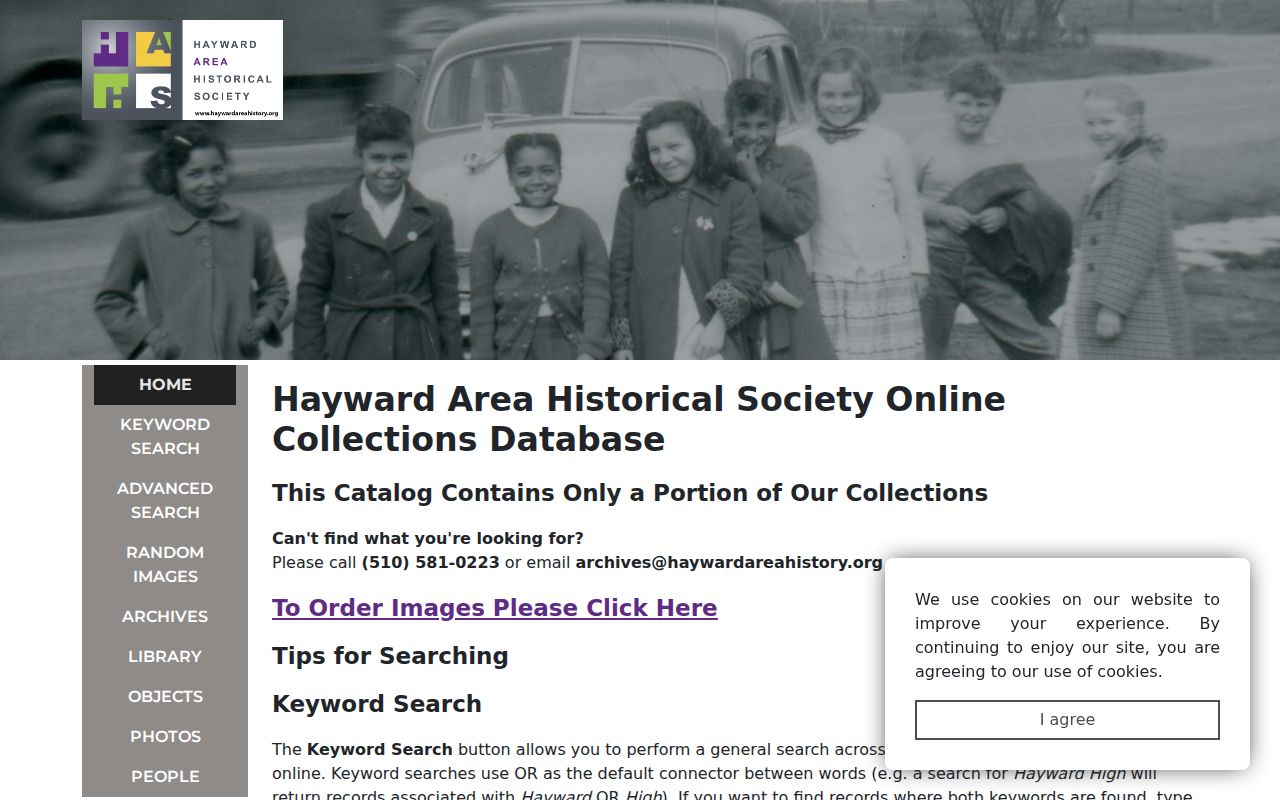
The catalog image represents the finding-aid stage of research, before a volume or page is treated as a confirmed record.
| Hayward subscriber or business name | Alphabetical name line in the 1952-53 telephone sample. |
|---|---|
| Hayward street address | House and street line tied to the printed entry. |
| Hayward telephone exchange and number | Number attached to the subscriber or business entry. |
| Hayward classified heading | Category and advertisement in the telephone volume’s classified section. |
| Hayward Polk notation | Use the local abbreviation key; the research method records spouse, h, r, and wid marks when shown. |
- Criss-cross directory
- The street-order part of a volume, used to move from an address toward a historical name where the edition includes it.
- Householder index
- An alphabetical or address-oriented index that points to a household entry; its coverage depends on the volume.
- Abbreviation key
- The volume’s guide to short marks. Read it before copying an entry so a symbol is not mistaken for a fact.
Hayward Criss-Cross Directory Clues by Address
A criss-cross section changes the direction of the search. Instead of starting with a surname, a researcher begins with a street and house number, then checks whether the volume gives a corresponding name. This is valuable for a past-household question, but the address section can be incomplete, the street name may have changed, and one printed entry may describe a subscriber rather than every person at the property.
Use the address section beside the alphabetical section. If the same name appears in both, compare the spelling, spouse notation, street line, and adjacent entries. A later move can be tested against another edition, a census, a newspaper notice, a Sanborn map, or an assessment and deed trail. The directory remains historical evidence, not a current resident roll.
Hayward Directory Years Beside Census Years
Dates make a historical directory search easier to audit. Hayward’s record story reaches from early local institutions through the postwar expansion of the city, but each source has its own coverage. Federal census schedules become public after 72 years, so 1950 is the newest census available in 2026 and 1960 opens in 2032. Directory editions can fill the years between census points.
| Period | Record milestone | Use in a Hayward search |
|---|---|---|
| 1867-1906 | Library beginnings, permanent library, Carnegie funding, and earthquake damage during construction | Local-history context before the named directory run |
| 1876 | Hayward incorporation and HAHS city account and assessment starting point | Property and civic trail for older households |
| 1925-1976 | R.L. Polk Hayward directory citation span | Address and name trail, with exact-year verification required |
| 1930, 1940, 1950 | Public federal census years used with directories | Household, relationship, occupation, and enumeration cross-check |
| 1952-1953 | Digitized Hayward telephone volume | Subscriber name, address, exchange, and number sample |
| 2001-present | Hayward Daily Review full text at the public library | Newspaper bridge after older clipping and directory gaps |
The sequence avoids a false smooth line. An entry can vanish because a household moved, a person died, a surname changed, or an edition missed the name. A census, obituary, probate file, or deed can distinguish those possibilities.
Trace a Household Through Hayward City Directories
Family-history work benefits from a narrow starting point. Keep the exact name, an address if known, and the reason for the search. Then move through editions in a fixed order. The Oakland Public Library’s exact years and San Leandro’s nearby run make it possible to test a gap rather than assume a volume exists.
- Find the first appearance in a named Hayward directory edition and record the exact page, street, and notation.
- Follow the name through the next available editions, noting moves, spelling changes, spouse marks, and any gap in the shelf.
- Check the criss-cross or address section, then compare neighboring entries without treating them as a complete household list.
- Pair the directory years with the 1930, 1940, or 1950 census and use the census as a separate household snapshot.
- Close the trail with Hayward newspapers, Heritage Hub obituary or death notices, probate, cemetery material, or a later deed record.
Repeat the name and address check in more than one source. HAHS holds Oakland Tribune clippings from about 1922-1996, Daily Review clippings from about 1956-2000, Hayward Journal material from 1878-1903 and 1929-1950, and Haypress school paper material from 1926-1981. Hayward Public Library offers Hayward Daily Review full text for 2001-present, East Bay Times from 2016-present, San Francisco Chronicle from 1985-present, Heritage Hub, NewspaperArchive, and Gale Primary Sources. Card or in-library limits may apply.
The Hayward Area Historical Society research gateway provides the local collection route represented in the image below.
The local research route complements the named edition shelf and helps explain a gap without turning absence into certainty.
Hayward Local History Beyond City Directories
HAHS is more than a directory shelf. Its holdings include City account ledgers and assessments from 1876-1949, Alameda County School Directories from 1916-1963, Hayward Poultry Producers records from the 1920s-40s, San Lorenzo Pioneer Cemetery material, clippings, and more than 20,000 photographs. These sources can identify taxpayers, students, local groups, and people named in civic records where a printed directory is silent.
San Leandro Library’s History Room covers Hayward and San Leandro directories from 1925-1965 and also lists yearbooks from 1933 to the present, Alameda census data from 1852-1920, maps, clippings, and obituary research. The San Leandro History Room collection is a practical nearby fallback when a Hayward year or address section is missing.
Nearby holdings can supply context, but a San Leandro volume must still be labeled as a neighboring collection rather than a Hayward custodian record.
Hayward’s Postwar Directory Story
Hayward’s directory trail overlaps a sharp change in the built landscape. The city’s population rose from about 14,000 in 1950 to 72,000 in 1960. Orchards and ranches gave way to subdivisions, and later growth concentrated around Downtown and City Center, Cannery, Mission Boulevard, and South Hayward BART corridors. A street entry from the middle of that change can sit beside a different parcel pattern, permit record, or community label a few years later.
Use Sanborn maps for footprint, construction, use, and block continuity, not as a reliable resident-name source. The cited Hayward map sequence begins in 1923 and is updated through 1960. Pair it with Polk volumes, permits, assessments, deeds, census schedules, and newspapers. This layered method keeps the city directory useful without asking it to prove more than it records.